Vector Based Logos are the best for producing high quality Graphics on your LED board.
What is a Vector Based Logo?
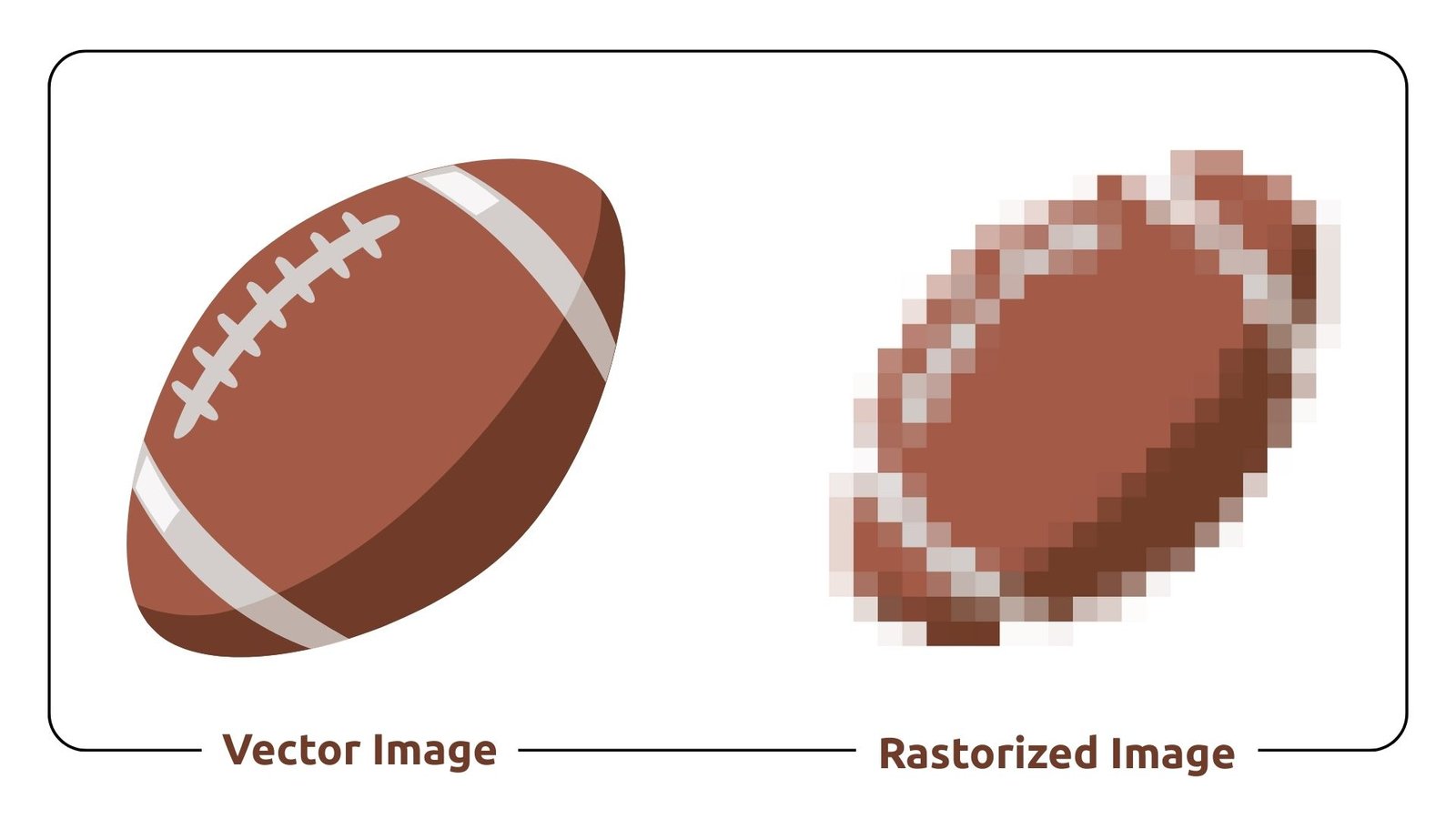
Vector files are in a format that is scalable, ideal for logos and illustrations that need to be resized without losing quality because it is a series of points and lines. JPEG files are raster (pixel-based) images, best suited for complex, detailed images like photographs, but they lose quality and become pixelated when scaled up.
Examples of how we use a Vector / Illustrator / EPS logo:
Note how large the red star can become, and it never gets “fuzzy” or blurry because it is a vector-based logo that continually scales up without getting jagged edges. When customers send us a vector-based logo we can use little pieces of the logo to create a more customized look!
WHAT IF I ONLY HAVE A JPG or PNG?
Of course we can work with a JPG or PNG logo, assuming it is of a decent size. The best way to tell is to look at the file size on a computer. If the file size is a 2-5 megabytes, that will work in our designs — as long as we don’t make it too large. If the file size is “KB” (example – 850KB) then it is a very small logo and will not work. Many logos that come from the internet are simply too small for us to work with.
Here are some examples of lower resolution JPG logos that still look great in an animation:
JPG LOGOS CAN ONLY GET SO BIG:
JPG and PNG WORK IF KEPT SMALL
PAGE SUMMARY:
Two graphic designers explain that logo formats can seem intimidating to beginners, but the key distinction is simple: vector logos versus bitmap logos. Vector-based logos (such as .AI or .EPS files) are preferred because they can be scaled to any size without losing quality, making them ideal for professional use. If vector files are unavailable, high-quality PNGs or JPEGs can be used as a fallback, but they should be large, high-resolution files—typically measured in megabytes rather than kilobytes.
They emphasize that logos saved from websites via right-clicking are usually too small and low quality, leading to poor results. Instead, designers should request original logo files from the sponsor, original designer, or brand manager. While designers can sometimes work with lower-quality files in a pinch, the overall takeaway is “garbage in, garbage out”: investing time upfront to obtain the correct logo format ensures better results in the long run.
FIND THE RIGHT ELEMENTS FOR YOUR GAMEDAY PRESENTATION
BOOK A CONSULTATION CALL
Our Creative Team is more than happy to walk you through the process and help you determine exactly what elements you will need, and how to customize them for your best application.